|
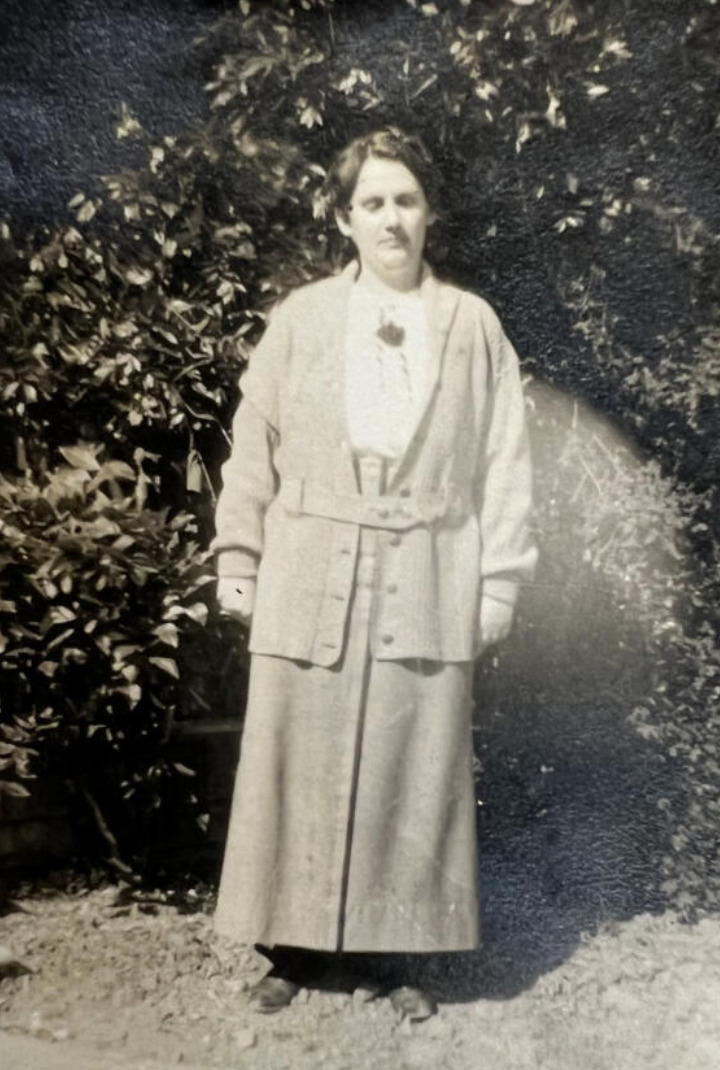
Jessica May Young (Stephens), (1893--1961) Jessica May Young grew up in St Louis, Missouri and earned in 1914 a Bachelor degree and, in 1915 a Master degree in astronomy and physics from Washington University, St Louis with a manuscript entitled "e;On the Cause of the non-appearance of certain periodic comets on their predicted returns". Young then enrolled at UC Berkeley and, in 1916, was appointed as a fellow at Lick Observatory pursuing a Ph.D in astronomy, which she earned in 1920, with a thesis entitled "The Galactic Rotation Effect in Open Clusters" (thereby becoming the fourth woman UC astronomy doctoral graduate after Phoebe Waterman (Haas) & Anna Estelle Glancy, 1913; Eleanor Edith Cummings), 1917; Sophia Hazel Levy (McDonald), 1920.) After briefly teaching physics and astronomy at the College of St Teresa in Minnesota and Northwestern University, in 1920 Young was hired as instructor of mathematics and astronomy at her alma mater, Washington University. Sometimes known as "Mrs Stephens" after her marriage to Eugene Stephens, a colleague in the mathematics department, Stephens made frequent trips from St Louis back to Lick Observatory for study and research. In 1924 she was advanced to Assistant Professor of Mathematics and Astronomy, the level at which she remained until she became {\it the first woman in astronomy promoted to Associate Professor} in the 1950s. Stephens enjoyed a robust and successful teaching career at Washington. Stephens promoted appreciation for astronomy through public lectures and occasionally wrote general interest articles. The Business and Professional Women's Club of St Louis honored Jessica Stephens in 1952 as one of eight outstanding "Rampart Builders". Dr Stephens retired as Associate Professor Emerita in 1958. She accepted one last teaching post in astronomy at North Carolina Agricultural and Mechanical College. |
|
|
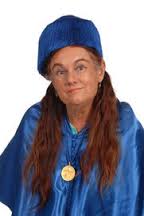
Virginia Trimble is Professor of Physics and Astronomy at UC Irvine and the oldest member of the department still on active duty. Virginia sponsored the Observational Astronomy Workshops in: 2013 & 2014 (in honor of Mary Lea & C. Donald Shane); 2015 (in honor of Rudolph L. Minkowski); 2016 (in honor of George H. Herbig); 2017 (in honor of Robert P. Kraft); 2018 (in honor of Anna Estelle Glancy & Emma Phoebe Waterman Hass); 2019 (in honor of Virginia Frances Farmer Trimble and Roy Stanley Farmer); 2020 (in honor of Margaret Burbidge); 2021 (in honor of Guido Münch & Lodewijk Woltjer); 2022 (in honor of Sophia Levy McDonald); 2023Q2 (in honor of Maud Worcester Makemson); 2023Q4 (in honor of Daniel Magnes Popper); 2024Q2 (in honor of Donna D. Elbert); 2024Q4 (in honor of Armin O. Leuschner); 2025Q2 (in honor of Virginia, herself). Virginia is a graduate of Hollywood High School, UCLA, and Caltech (PhD 1968) and holds an honorary M.A. degree from the University of Cambridge (UK) and dottora honoris causa from the University of Valencia (Spain). She has been involved in governance in AAS, APS, IAU, IUPAP, PBK, Sigma Xi, ASP and some other organizations and is currently interested in the structure and evolution of stars, galaxies, and the universe, and of the communities of scientists who study them. As a student at CalTech, Trimble modelled for Richard P. Feynman's artwork. For 16 years, Trimble read every astronomical paper published in 23 journals. Preceded by Vera Rubin, Trimble was the second woman to be granted research time with the 200-inch Hale telescope on Palomar mountain. Since the 1960s, as the spouse of gravitational wave astronomy pioneer Joseph Weber, Virginia has been integral to the development and fruition of this major new field, as acknowleged during the 2016-02-11 NSF press conference announcing the first direct detection of gravitational waves by the LIGO instrument. See also the (2026) Sky & Telescope article: Virginia Trimble: Memory Keeper of Modern Astronomy. See also Weber and Trimble, chapter 9 of Janna Levin's (2016) book: Black Hole Blues and Other Songs from Outer Space and among the inspiring autobiographies in Trimble & Weintraub (2022): The Sky is For Everyone. |
|
|
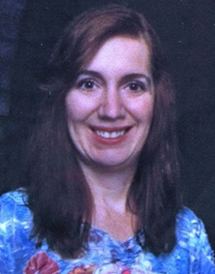
Elinor is a staff astronomer at Lick Observatory specializing in laser guide star adaptive optics and near infrared camera instrumentation and observations. She received her Ph.D. in Physics/Astronomy from the University of New Mexico in 1998. Her current research interests are studying quasars and their host galaxies. |
|
|
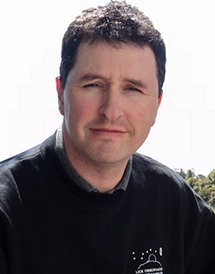
Paul is a staff astronomer at Lick Observatory. An amateur astronomer since childhood, after UK-based undergraduate studies, master's research and a Ph.D. in astrophysics (2000), he spent three years at the Max-Planck-Institute for Extraterrestrial Physics (MPE, Germany). Having attended research observatories worldwide, he then joined the European Southern Observatory (ESO, Germany) and two years later, relocated to Chile, supporting operations of the Very Large Telescope (VLT). He continued as a VLT operations astronomer until late 2010. His research includes giant galaxies, clusters of galaxies, large-scale structure and "cosmic flows." |
|
|
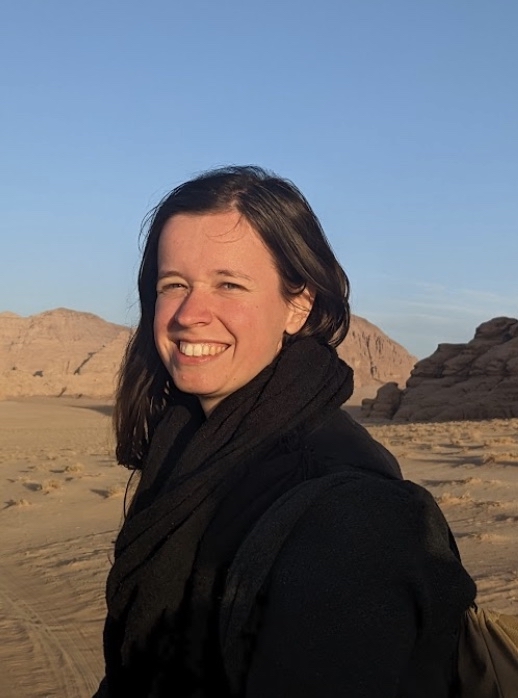
Tess is a support astronomer at Lick Observatory. She recently completed her Ph.D. at CalTech and JPL, where she used ground-based observations and laboratory experiments to study Saturn's largest moon Titan. Prior to joining Lick, she worked at both Keck Observatory (Keck Visiting Scholar) and the Great Basin Observatory (Scientist in Park). Hwr reasearch interests include seasonal evolution of Titan's atmosphere, stellar occultations and the interface between Solar System and exoplanet science. |
|
|
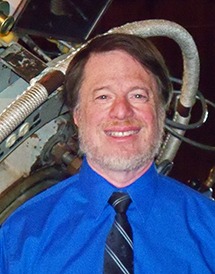
Pat Maloney has been actively involved with Astronomy since he ground an 8-inch mirror and built his first telescope as a high school freshman. He has operated telescopes for public viewing programs at various colleges and universities. He currently teaches astronomy labs at Santa Clara University. For many years, Pat has also operated the 36-inch and 40-inch telescopes for Lick Observatory’s summer evening programs. |
|
|
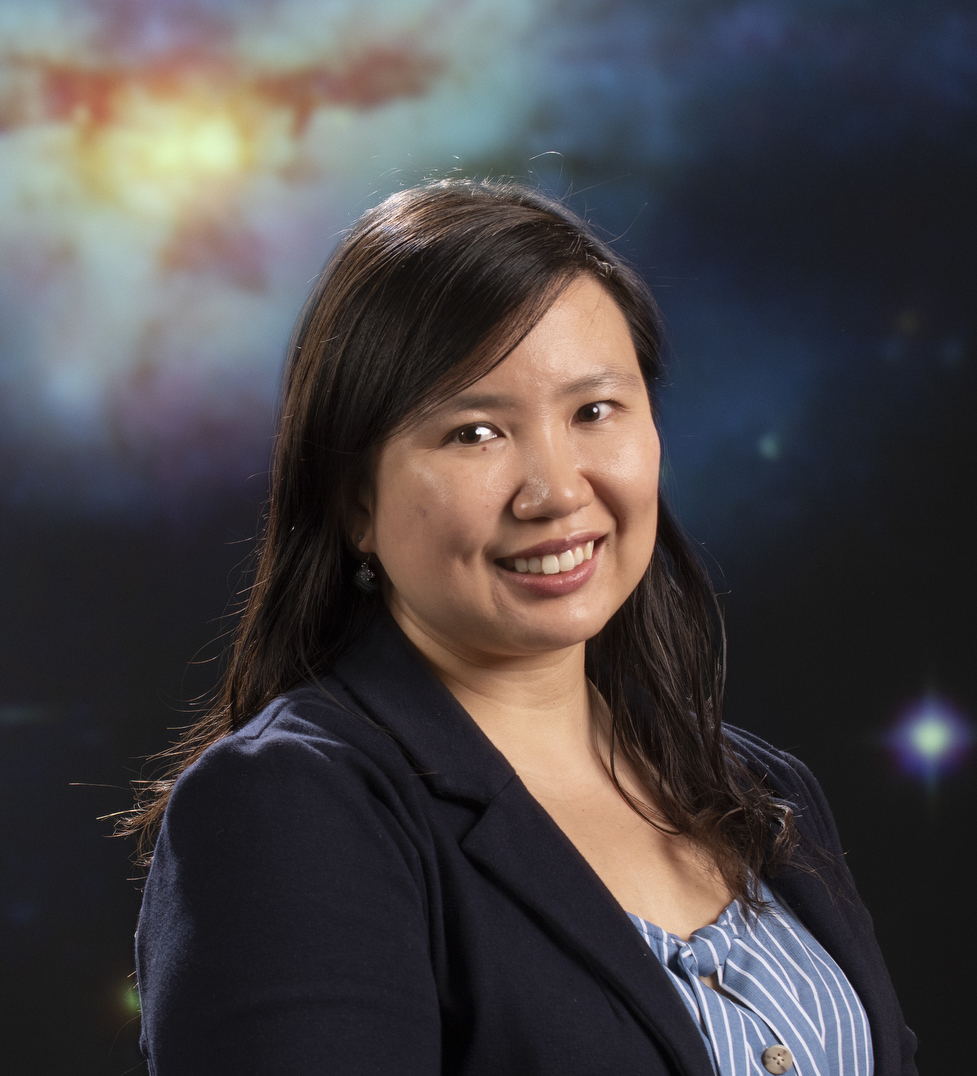
Vivian U is an observational astronomer at the California Institute of Technology IPAC and the University of California, Irvine. She received her bachelor’s degree in Astrophysics from Caltech and her PhD in Astronomy from the University of Hawaii at Manoa. She is currently a co-chair of the Habitable Worlds Observatory AGN Working Group and of the NASA Cosmic Origins AGN Science Interest Group Leadership Council. Vivian was a recipient of the 2020 AAAS Newcomb Cleveland Prize, and was named a National Academy of Sciences Kavli Frontiers of Science Fellow in 2019. She was featured on PBS NOVA in the 2023 Episode "New Eye on the Universe", and was a speaker at the 2024 TEDxManhattanBeach event. Having been classically trained at UH's Maunakea Observatory as a graduate student and at UCO's Lick Observatory as a postdoctoral fellow, Vivian highly values the hands-on education a graduate student receives at a ground-based observatory. She also believes that solid scientific writing skills are an integral part of being an effective scientist communicating one's ideas and results to others. Therefore, as part of her National Science Foundation AST Astronomy and Astrophysics Research Grant (2408820), Vivian augments the Observational Astronomy Workshop at Lick Observatory by increasing graduate student participation and adding a new science communication module to enrich the education and professional development of the student participants. |
|