Safety
|
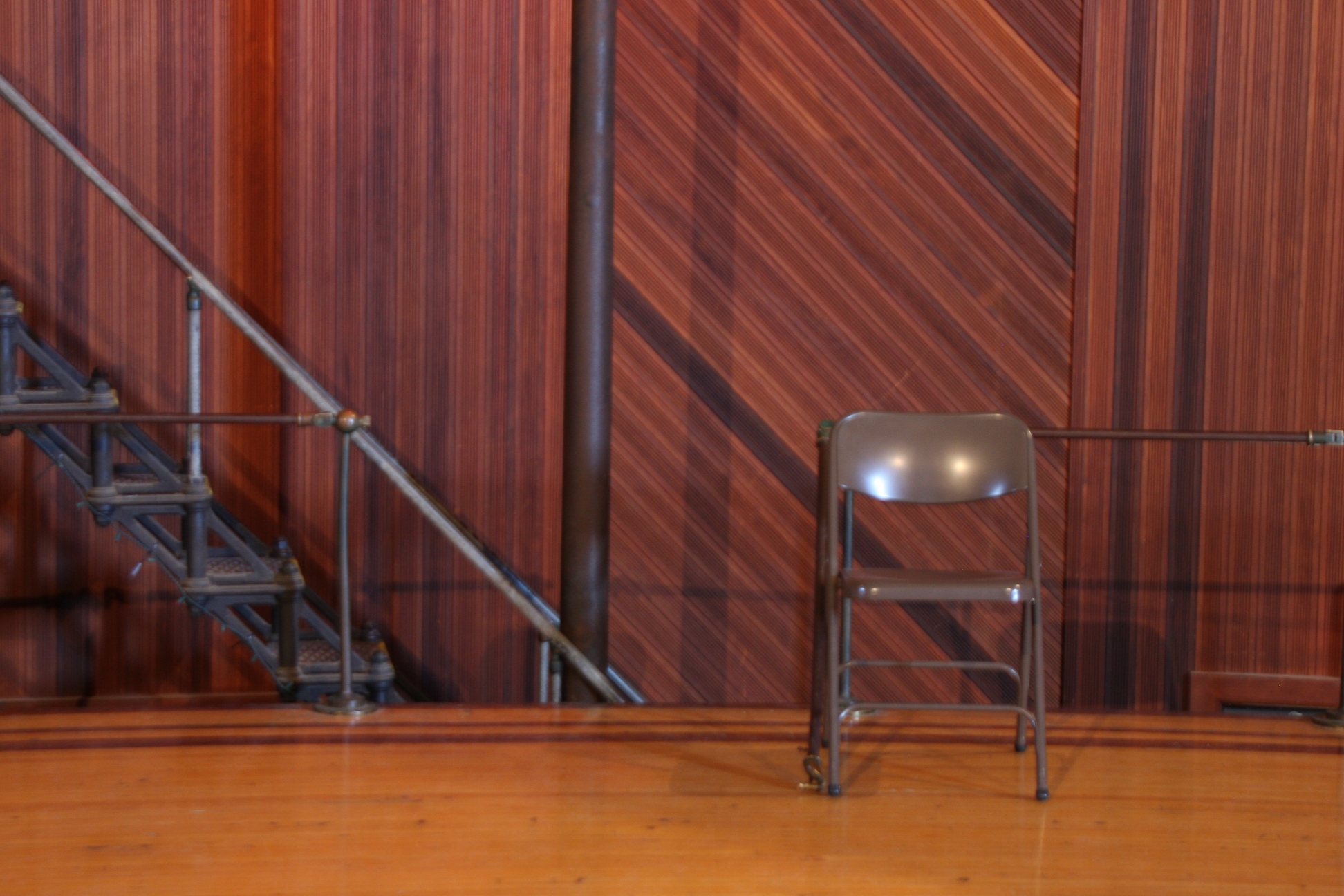
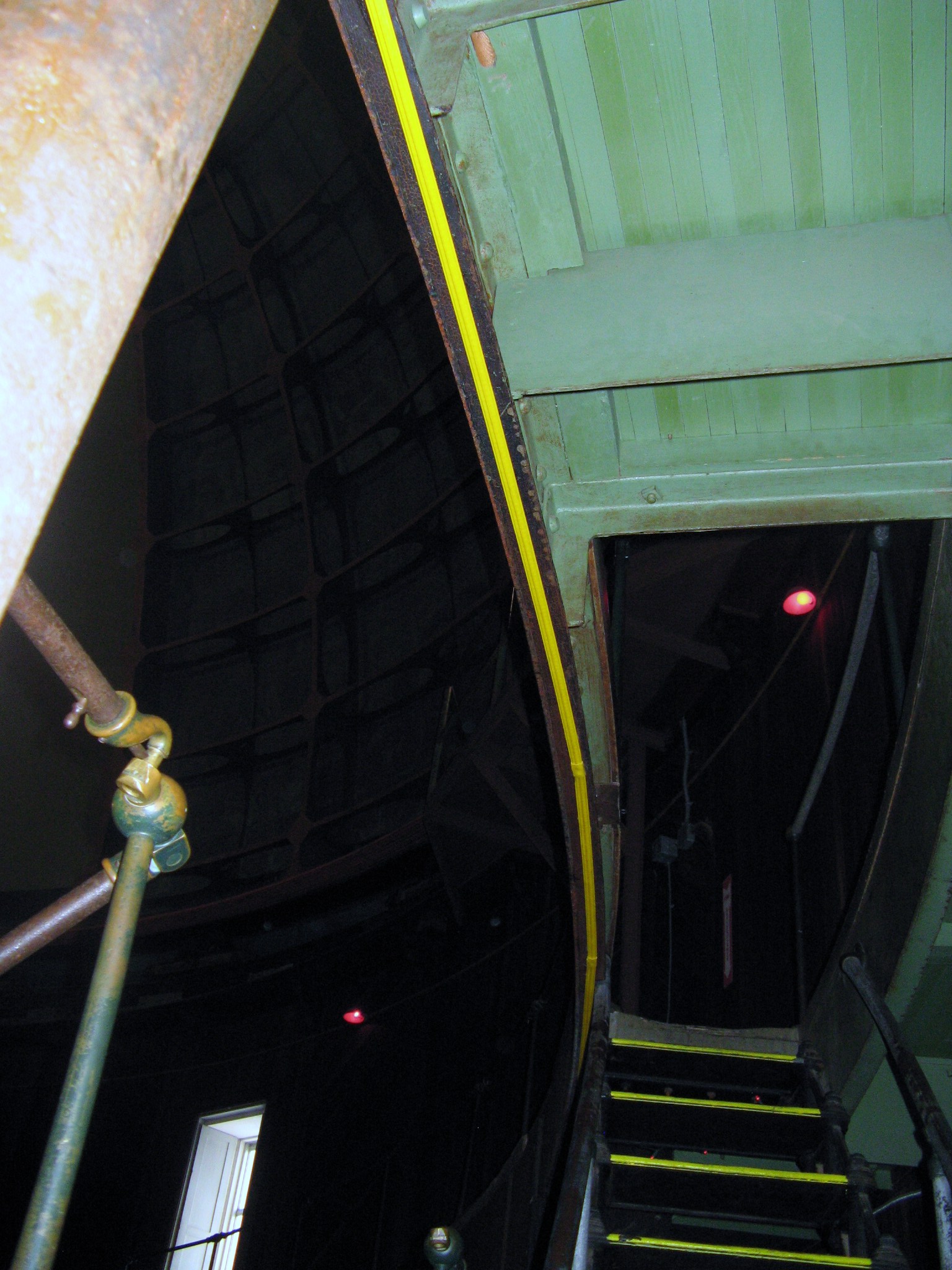
Safety is the most important aspect of operating the 36" Refractor. Safety includes visitor safety, astronomer safety, and telescope/instrument safety. Visitor Safety The principal safety concerns for public visitors are tripping, falling, or getting crushed. Most visitors are not used to working in the dark with minimal lighting. This, in conjunction with low railing heights, ladders, and steep staircases, necessitates a thorough safety talk prior to observing and/or volunteer docents to alert visitors to the dangers and prevent accidents. Figures 1, 2, and 3 show the main tripping hazards for visitors, which involve stepping over the railings and onto the observing floor at whatever height the floor happens to be. In general, a chair is placed by the open railing bar so that people see a barrier there and don't trip over the bar. The railings themselves are not high enough to prevent falls nor strong enough to adequately support someone's weight,so no one should ever lean or sit on them. When the floor is all the way up, it doesn't not align perfectly with the catwalk, so there is a small trip hazard there to be aware of. No one should ever step on or off the observing floor while the floor is moving. To prevent crush injuries there are pressure safety switches (e.g., Figure 4) that will turn off power to the floor, stopping its motion when triggered. Power to the floor can be restored by turning the desk console main power switch back on. Astronomer Safety
As with the public, the astronomers using the telescope need to be aware of the physical dangers of working in a dome at night. When operating the 36", there are a more safety issues than when using a modern telescope. Always check in with the Shane Telescope Operator before observing so that they know you are there. It is highly recommended to always have an observatory radio/walkie-talkie on your person while using the telescope. The telescope is heavy and there are consequences to that weight. It weighs approximately 25,000 pounds and must be treated with respect. Being as heavy as it is, it can get away from you if you don't pay attention to your momentum. This can lead to it crashing into the floor or worse an observer on the floor. One must alway pay attention to leverage points. It can be very tiring to use for a half night and nearly impossible to use by one's self the entire night if you are not smart about how you move the telescope around. Some hints are:
When going up to the top of the telescope pier, be very careful on the spiral stairway as well as at the top. The walkway is narrow and the railings are very low and will not prevent a fall. Only 36" telescope operators and observatory staff are allowed on the pier. The final safety issue to be aware of is the use of ladders. Many objects are not accessible without them. The big wooden ladder requires an assistant if one wants to move the telescope while standing on it. When using the smaller ladders, one should have a spotter whenever possible. Telescope/Instrument Safety
There are a few principal concerns with keeping the 36" safe. This list is here only as a reminder and should be covered during a checkout. The main ones are:
|
 Figure 1: The floor down in the proper stowed position
|